

The First Ten Wedding Decisions to Make After Engagement

Key facts
- Decide which celebrations to hold.
- Agree on three shared priorities.
- Name consultation and approval roles.
The ten decisions, in order
1. What are we celebrating? Decide whether the plan includes a wedding reception alone or also a jaha, henna, engagement dinner or another gathering. Separate customs meaningful to your families from arrangements you are assuming everyone expects. Each additional event needs its own guest count, budget and owner.
2. What are our top three priorities? Each partner lists three independently, then agrees on a shared order. For example: accessible location, live music and photography. When a quote exceeds the plan, this list tells you what to protect and what to simplify.
3. Who approves decisions? Name the people whose input you will seek and the people authorized to approve spending or sign a contract. Family support is valuable, but a booking becomes confusing when three people promise different things to the venue.
4. What is the spending ceiling? Write a comfortable target, an absolute ceiling and a modest reserve. Record any family contribution with its amount and timing. Split the estimate into major services rather than spending the entire amount on the hall first. Do not compare an all-inclusive quote with a room-only quote as though they cover the same work.
5. How many guests are possible? Make an initial range. Include expected children, companions and relatives arriving from outside Jordan. Ask families for names by a clear date, then decide what to do if requests exceed the available seats. The exact count can wait; the range cannot if you are choosing a venue.
6. What date window works? Choose several possible dates or a season. Check important family travel, work leave, school or exam periods and weather needs. Ask vendors about availability; do not announce a fixed date based on a verbal hold.
First Wedding Decisions
Check each item as you complete it. Add it to your notes app or keep your progress in Favorites.
7. Where should it happen? Compare the city or area first—Amman, another governorate or a destination within Jordan—then shortlist venues for guest access, realistic capacity, privacy, catering conditions and a weather alternative. Visit before signing.
8. What type of venue package fits? Define whether you need food, furniture, sound, decor, coordination and setup from the venue or separately. Ask for line items and overtime rules in writing. Venue selection and package selection are related but separate decisions.
9. Which suppliers have limited availability? Prioritize services you care about most and those tied to the date, such as a photographer, planner or entertainment team. Ask for the assigned people, deliverables, timing, payment stages and cancellation terms. Keep a second option until the booking is confirmed.
10. How will everyone follow the plan? Choose a shared decision sheet for quotes, deposits, contacts, invitations and deadlines. Assign one person to maintain it and one on-the-day contact. This simple rule prevents lost WhatsApp details from becoming conflicting instructions.
A useful first conversation with both families
Try: “We are gathering names and priorities this week. We have not reserved a hall yet. Please send must-invite names by Friday, including any guests travelling, and tell us about access needs. We will confirm a guest limit after checking venues and costs.” This invites help without promising seats before capacity and budget are known. Adjust the wording to your family relationships.
For the full sequence after these first decisions, see Farhetna’s wedding service directory for your next steps.
Common questions
Should we set the date first?
Choose a window first; confirm the exact date alongside venue availability and key commitments.
Do we need an exact guest list immediately?
No, but you do need a plausible range, with children and possible companions counted consistently.
What if we disagree on priorities?
Compare what each choice changes for cost, guests and experience, and postpone deposits until you share the same spending ceiling.
Related stories
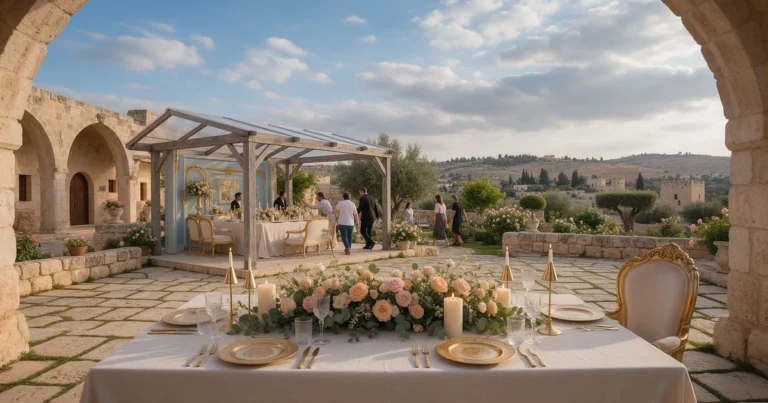
Outdoor Wedding Weather Plan in Jordan: Rain, Wind and Heat
Rain, wind or heat can change an outdoor ceremony. Agree on a seated indoor fallback, decision owner, timing,…

How to Plan Wedding Guest Accommodation in Jordan
Help out-of-town guests find a suitable stay near your Jordan wedding. Compare complete room offers, clarify who pays…

How to Plan Wedding Guest Transport in Jordan
A practical arrival and return plan for wedding guests in Jordan, covering the guest gate, parking, shuttle seats…