

Common Wedding Planning Mistakes and How to Avoid Them

Key facts
- Test venue capacity with a realistic layout.
- Compare complete written prices and terms.
- Recalculate when guest names change.
Mistake 1: Choosing a venue from photos alone
A gallery cannot show the room with your actual seated layout, buffet, stage and accessible routes. Visit the space, ask for a sample layout at your guest range and check parking, toilets, setup hours and a weather alternative. Better decision: compare venues that meet the essential needs, then weigh atmosphere and price.
If the venue is not available on your date, do not base other bookings on a verbal possibility.
Mistake 2: Treating a starting price as the final cost
One quote may include food, furniture, sound and service staff; another may be for the room alone. Ask each provider for the complete scope, total in JOD, taxes or fees if applicable, overtime, deposits and cancellation or postponement terms. Better decision: use the same brief and compare like with like. Leave a modest reserve for changes, including additions to the guest count.
Mistake 3: Adding guests without recalculating
An extra household may affect meals, seating, invitation counts and transport. Make an initial guest range with both families, including children and possible companions. Agree on a policy before requests arrive. Better decision: when new names are proposed, calculate the total effect and check the venue’s real capacity before promising seats.
Mistake 4: Letting many people instruct the same vendor
Helpful relatives may each give different timings or design choices. Name one owner per supplier and one person with authority to approve changes. Share one dated run sheet. Better decision: a family member can gather ideas, but the named owner sends the final instruction and saves the written response.
Avoid Wedding Planning Mistakes
Check each item as you complete it. Add it to your notes app or keep your progress in Favorites.
Mistake 5: Booking a style without confirming the team
A beautiful portfolio may contain work by several people. Ask who will attend, review that person’s relevant examples, and define hours, deliverables and substitute arrangements. Better decision: choose based on the work and scope you will actually receive, not a highlight reel or an unverified promise.
Mistake 6: Sending invitations with unresolved details
Before sending, verify the date, venue address, map pin, spelling, language, children and companion policy, and a reply deadline before the venue’s final-count date. Test any digital link on a phone. Better decision: track accepted, declined and unanswered separately; silence is not a confirmed seat.
Mistake 7: Leaving the final handoff until the wedding morning
The couple should not be the default contact for supplier arrivals while getting ready. Give the named day contact the final run sheet, contracts or key terms, telephone numbers, setup access and authority limits. Reconfirm suppliers and balances before the day. Better decision: walk through the sequence from setup to departure and resolve conflicts in advance.
When a mistake has already happened, write down what is confirmed, what is only assumed, the deadline and the smallest reversible correction. If a contract is involved, read its actual terms before changing plans. Use Farhetna to discover alternatives and verify each provider directly.
A five-minute check before any deposit
Ask five questions in order: Do we know the guest range? Does the venue or vendor fit our essential requirements? Is the complete scope written down? Do we understand what the deposit secures and whether it is refundable? Who has approved this spending against the shared budget? If one answer is unknown, pause and request it in writing.
A short delay to clarify a term is easier to manage than a dispute about what everyone thought the booking included.
Common questions
What is the first mistake to check?
Whether your guest range, venue capacity and complete cost fit together.
Can we fix a booking made too early?
Review written change and cancellation terms, then compare the cost of adapting the plan with the cost of changing the booking.
How do we stop repeated last-minute changes?
Set an owner and a decision deadline for each item, then send one final version to everyone affected.
Related stories
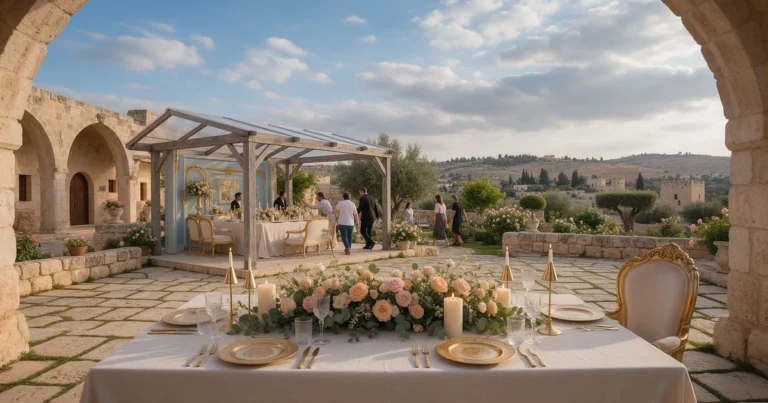
Outdoor Wedding Weather Plan in Jordan: Rain, Wind and Heat
Rain, wind or heat can change an outdoor ceremony. Agree on a seated indoor fallback, decision owner, timing,…

How to Plan Wedding Guest Accommodation in Jordan
Help out-of-town guests find a suitable stay near your Jordan wedding. Compare complete room offers, clarify who pays…

How to Plan Wedding Guest Transport in Jordan
A practical arrival and return plan for wedding guests in Jordan, covering the guest gate, parking, shuttle seats…