

Indoor Wedding Venue Lighting: Questions for Your Photographer
Key facts
- Review the room under planned event lighting.
- Mark positions for the essential moments.
- Review comparable indoor galleries with the photographer.
Review the event setting
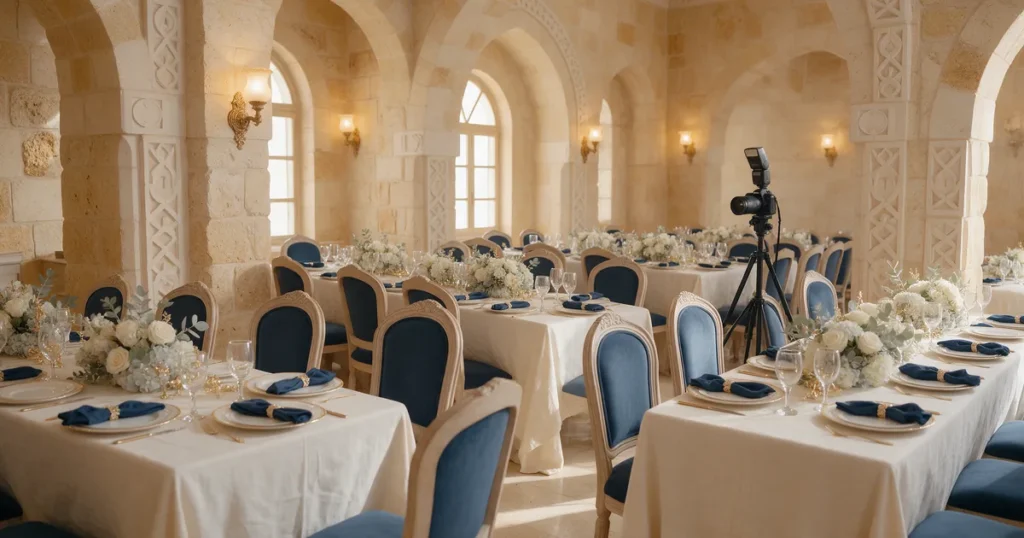
A daytime venue visit may not show the conditions at your evening reception. Ask whether the room can be demonstrated with the planned event lights, curtains and stage setup. If that is not possible, request recent examples of the same room and describe the proposed setup to the photographer.
Record where the couple enters, sits and stands for key moments. The room may look bright overall while a particular position needs attention. Include any separate family space or privacy restriction so the photographer can plan the relevant coverage.
Ask about each key moment
Share the program and ask how the team will photograph the entrance, couple portraits, family groups and reception. Discuss decorative lighting and any planned changes during these moments. The goal is a workable plan for the actual scene, rather than asking the venue simply to make everything brighter.
| Question | Who should answer |
|---|---|
| What lights operate during each key moment? | Venue or lighting operator |
| Can the photographer use flash or additional lights? | Venue and photographer |
| Where can stands go without blocking movement? | Venue coordinator and photographer |
| Who can approve a lighting change during the event? | Couple and coordinator |
| Where will family portraits happen if the main spot is unsuitable? | Photographer and venue |
Indoor lighting review
Check each item as you complete it. Add it to your notes app or keep your progress in Favorites.
Review examples in similar conditions
Ask the photographer for a full gallery from a comparable indoor event. Look at the people and moments you care about, and discuss whether the example reflects the style you want. A bright outdoor portrait does not answer how the team would approach your reception room.
Avoid prescribing camera settings from a checklist. Describe the result and preferences instead: natural-looking portraits, fewer interruptions or limited use of additional lights. Ask the team what is feasible with the room and restrictions, and which compromises the plan may involve.
Coordinate equipment and changes
If additional lights are proposed, confirm setup time, power needs, placement and any charges. Ask who secures stands and cables and how they will remain clear of exits and busy routes. Check venue rules directly; a photographer’s usual arrangement may need adjustment in a different room.
Choose a contact who can speak with the venue operator on the day. Do not leave the photographer searching for someone to adjust lighting just as a planned moment begins. If the preferred portrait area is unavailable, have a second agreed position.
Put the plan into the final brief
Include key locations, restrictions, equipment approval, operator contact and fallback portrait spot in the final event brief. If decor or seating changes, update the photographer before the wedding. Discuss lighting before paying for optional additions whose usefulness has not been confirmed.
Discover venues and photographers through Farhetna and confirm arrangements directly with your selected providers.
Common questions
Should we inspect the venue at night?
A visit or demonstration matching the planned lighting can be useful; otherwise discuss relevant examples with the team.
Do we always need extra lights?
No. Ask the photographer what your room and preferences require, subject to venue rules.
Who changes the venue lights?
Confirm the authorized venue operator and a contact who can coordinate requests.
Related stories
Wedding Photo Usage Rights: What to Confirm Before Booking
Separate the questions The deliverables tell you what files or albums arrive. The usage agreement tells you what…
How Many Hours of Wedding Photography Do You Need?
List the moments that matter Decide whether you want getting-ready photographs, couple portraits, family groups, the entrance, reception…

Plan Couple Portraits Without Delaying Your Wedding Guests
Choose a slot that fits your preferences Discuss whether portraits happen before guest arrival, between scheduled parts of…