

How to Plan Wedding Guest Accommodation in Jordan
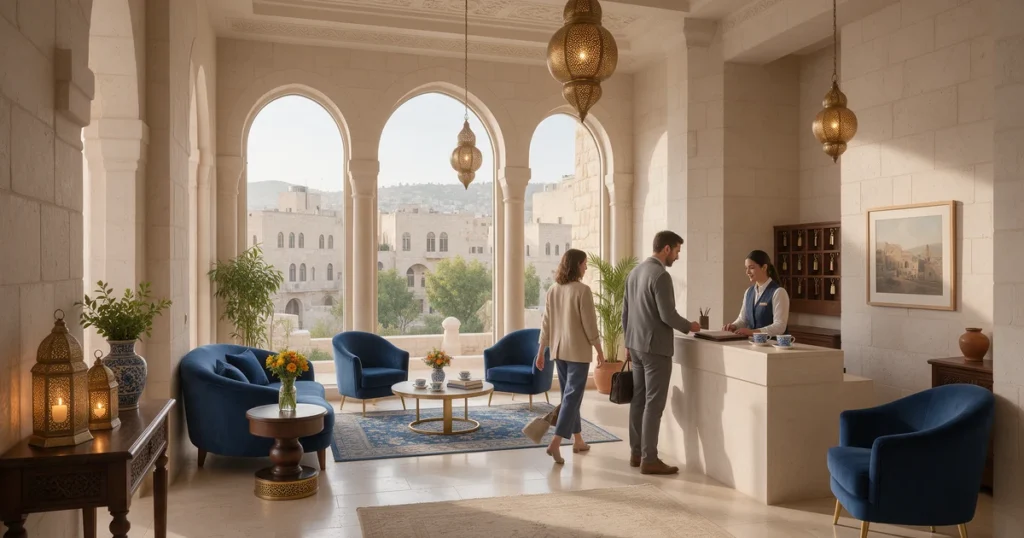
Key facts
- Room demand comes from confirmed overnight guests and households, not the total invitation count.
- A group rate, a held room block and a host-paid booking can carry different obligations.
- Compare the full payable price, room type, cancellation terms and booking cutoff for the actual dates.
- Hotel reservations and shuttle riders are separate counts that should be reconciled before the event.
Out-of-town wedding guests need a place to sleep, a check-in plan and a way back after the celebration. In Jordan, an Amman event differs from a Dead Sea or Aqaba one. Base accommodation advice on the guests who actually intend to stay.
Estimate rooms from guests, not invitation cards
Mark the guest households travelling from another city or abroad. Ask them whether they expect an overnight stay, how many nights they need and whether they prefer a hotel, their own arrangement or a family home that has been offered. A couple invited together may need one room; a family may need a different room configuration; some guests may travel home after the event. Do not turn the number of people invited into a room count.
Keep a range for likely, uncertain and host-paid rooms. State who reserves and pays; a hotel suggestion is not a paid reservation. Jordanian families may host visiting relatives, but confirm both household capacity and guest preference before offering a home.
Choose location by the full guest journey
Compare a hotel near the venue with one near relatives, a central pickup point or the airport. Ask guests how they will arrive and leave. The lowest nightly rate can become inconvenient if the return from a remote venue is long or a late flight leaves no practical check-in plan. The Jordan Tourism Board’s hotel guide groups properties by destinations including Amman, the Dead Sea and Aqaba; treat it as a discovery tool, then verify the current offer with the property.
Test the journey on a map at a similar time of day, but confirm the actual guest entrance and vehicle route with the venue. If a hotel will be a shuttle pickup point, ask where a minibus may stop, when the lobby can expect a group, and where guests will return. The Farhetna guest transport guide helps connect the lodging and arrival plans. Keep travel times as estimates rather than promising an exact drive.
Compare like-for-like room offers
Ask two or three suitable properties for the same stay dates, estimated room mix and number of nights. A useful comparison includes the room category, maximum occupants, extra bed or cot availability, breakfast, taxes and service charges, parking, cancellation rules, check-in and checkout times, and the full payable amount. Ask whether the quoted rate changes for a weekend or an extra night. Do not advertise a discount before you have a written offer for the actual dates.
A hotel hosting the wedding may simplify the transfer, but staying on site is only one option. Review the event contract and the room proposal separately. Ask whether rooms are included, offered at a guest-paid rate or merely subject to availability. For guests with a tighter budget, a second nearby option can be more helpful than a single expensive hotel. Confirm its transport route before calling it “nearby.”
Wedding Guest Accommodation Checklist
Seven checks for room demand, hotel terms, guest booking and the journey to the celebration.
Understand a room block before agreeing to it
A hotel may offer a group rate or a set of rooms held for guests to book individually. Those arrangements are not identical. Ask in writing how many rooms are held, for which nights, how each guest books, the booking cutoff date, and what happens to rooms left unused. Check whether the organiser has a minimum pickup, deposit, cancellation charge or other financial obligation. If guests pay directly, tell them so clearly. If the hosts are paying, agree on an authorised room list and a billing process with the hotel.
Some hotel systems provide a group booking link with a contracted rate and clear cutoff date, as Marriott describes for its ResLink tool. That example shows what details to request; availability and terms depend on the property. Test your actual link on a phone without completing a booking. It should show the right hotel, dates, room offer and currency. Keep the hotel’s direct contact for guests who need a different room or an extra night.
Check the details that affect particular guests
Ask about accessible rooms and the route from drop-off to the bedroom, lift, breakfast area and event transport pickup. “Accessible” may cover different features; request the exact facilities needed and confirmation for the specific room. Ask guests concerned what works for them instead of assigning a room based on an assumption. See the accessible wedding guest guide for the venue side of the journey.
Families may need connecting rooms, more than one bed, a cot or an earlier bedtime for children. Visitors flying in may need luggage storage or a late arrival arrangement. A guest leaving after a late celebration may need a later checkout or another night. All of these are requests to confirm with the property, not benefits to promise in the invitation. Keep individual needs with the organiser and hotel rather than broadcasting a guest list in a group message.
Tell guests exactly what is optional and who pays
Share a short accommodation note once the hotel confirms the offer. State the hotel name and address, stay dates, room rate or booking link if applicable, deadline, what the price includes, who pays, and the route to the venue. If you are simply suggesting places, say that guests are free to book elsewhere. If a limited block exists, explain that a room is secured only when the guest receives their own reservation confirmation.
Keep the Arabic and English versions consistent when different relatives need them. A digital invitation can point to the accommodation note, while the essential ceremony location remains easy to find. Use Farhetna’s invitation designs to organise the celebration details; avoid putting a long or changing hotel policy inside an image that cannot be updated for everyone.
Reconcile the plan before the wedding
Before the hotel’s cutoff, ask guests to book or decline the suggested option. Have the hotel confirm the number of rooms actually reserved through the group arrangement without asking it to reveal unnecessary personal details. Send a reminder with the verified link and deadline, then confirm the shuttle rider count separately. A guest who booked another hotel may still need transport; someone in the hotel block may drive themselves.
Give one trusted person the hotel contact, venue contact, transport contact and latest arrival instructions. Check late arrivals, return pickup and any host-paid rooms again shortly before the event. The plan is complete when an out-of-town guest can understand where to stay, how to reserve, what it costs, how to reach the celebration and how to return without depending on the couple’s phone on the wedding day.
Common questions
Does the couple have to pay for out-of-town guests’ hotel rooms?
There is no single arrangement for every wedding. Hosts may pay for selected rooms, share an optional hotel offer or let guests book independently. State clearly who will reserve and pay; do not imply that a suggested hotel is a paid booking.
What should we ask before accepting a wedding hotel room block?
Get the nights and number of rooms, room types, full rate, booking method, cutoff date, unused-room release process, and any deposit, minimum pickup or cancellation obligation in writing. Confirm whether guests pay the hotel individually or the hosts are billed.
Editorial trust
Sources
Related stories

Outdoor Wedding Weather Plan in Jordan: Rain, Wind and Heat
Rain, wind or heat can change an outdoor ceremony. Agree on a seated indoor fallback, decision owner, timing,…

How to Plan Wedding Guest Transport in Jordan
A practical arrival and return plan for wedding guests in Jordan, covering the guest gate, parking, shuttle seats…
How to Check a Wedding Venue’s Real Capacity in Jordan
A hall’s advertised number is only the start. Confirm the approved room limit and test your actual tables,…