

How to Plan a Wedding in Six Months in Jordan

Key facts
- Set budget ceiling, priorities and decision owners.
- Estimate guests and choose several date options.
- Visit venues and confirm one in writing.
Week one: make a decision sheet
Agree on the celebration format, three shared priorities and a comfortable spending target with an upper limit. List any henna, jaha or other event separately. Ask both families for must-invite names by a fixed date and create a realistic guest range that includes children and companions. Set a few viable dates, not a single ideal Saturday.
Assign one person to keep the decision sheet up to date and state who approves deposits. This prevents the first attractive venue quote from consuming money needed for everything else.
Months six to five: secure the constraints
Contact venues that fit the guest range, accessibility needs and area. Ask for available dates, seated capacity, food and external-vendor rules, setup time, weather alternative and a complete JOD quote. Visit the actual room. If the preferred date is unavailable, compare another date with the whole family’s travel plans before switching. Confirm the venue and date in writing and check deposit, postponement and cancellation conditions.
Once the place is firm, approach priority suppliers with the same short brief. A photographer, planner, beauty team or zaffe may have different availability; book based on your priorities, not a generic order. Confirm the individual or team assigned and exactly what they will deliver. Use Farhetna’s vendor questions for a consistent comparison. Begin discovering categories at Farhetna and confirm current details directly.
Six-Month Wedding Plan
Check each item as you complete it. Add it to your notes app or keep your progress in Favorites.
Months four to three: close the main design decisions
Choose food and service arrangements, attire and alterations, beauty trials if wanted, decor, sound and transport. Avoid bespoke work with delivery dates that cannot be confirmed. Ask the venue whether external teams need approval or extra fees. Put payment milestones and delivery dates in one tracker. Draft the ceremony and reception flow, including family photographs and any travel between locations.
Decide the invitation wording with both families and verify names and contact information.
This is also the moment to simplify: one reliable setup may serve better than several complex transitions. Keep a small reserve for guest changes or logistics. If a service exceeds the budget, revisit your agreed priorities before cutting an essential guest or access need.
Months two to one: invite and confirm
Send invitations with a clear reply deadline before the venue’s final-count date. Give travelling guests the information they need promptly. Track accepted, declined and unanswered separately; follow up without assuming silence means yes. Test invitation links and directions on a phone. Draft a seating layout after responses start coming in, while keeping a few flexible seats.
Share a draft run sheet with the venue and suppliers: contact names, arrival times, setup, sound check, food service, photographs and departure. Confirm dietary and accessibility arrangements the guests have requested. Ask each supplier when they need final numbers, not just the venue.
Final weeks: freeze what must be fixed
Give the venue and caterer the count by the agreed date, reconcile the seating plan and send a final schedule to the on-the-day coordinator. Reconfirm all bookings and balance payments in writing. Keep a single contact sheet and copies of agreements available to the person handling issues. Leave the couple free to take part in the celebration rather than answer supplier calls.
Common questions
Is six months enough for a popular date?
It depends on real availability. Keep alternative dates or venues and verify before committing elsewhere.
What can we simplify safely?
Reduce optional events, custom items or complicated transitions while protecting essentials such as guest access, food, venue and agreed key services.
Should we send invitations before confirming the venue?
Wait until date, place and core guest details are secure; give travelling guests an early heads-up if appropriate without promising unconfirmed details.
Related stories
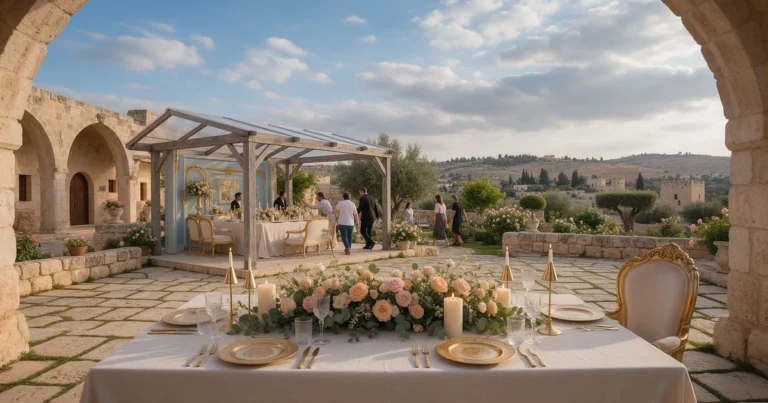
Outdoor Wedding Weather Plan in Jordan: Rain, Wind and Heat
Rain, wind or heat can change an outdoor ceremony. Agree on a seated indoor fallback, decision owner, timing,…

How to Plan Wedding Guest Accommodation in Jordan
Help out-of-town guests find a suitable stay near your Jordan wedding. Compare complete room offers, clarify who pays…

How to Plan Wedding Guest Transport in Jordan
A practical arrival and return plan for wedding guests in Jordan, covering the guest gate, parking, shuttle seats…